Silicone sealants are critical materials in modern electronic assemblies. Beyond simply bonding components, they provide electrical insulation, environmental protection, mechanical stability, and long-term reliability. Selecting the correct silicone requires understanding safety certifications, material properties, and practical application challenges.

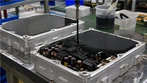
Precision Automation in Electronics: An automated robotic system dispensing non-slump, one-part black silicone sealant onto a PCB module.
This process ensures reliable bonding and environmental protection, meeting the high standards of IATF 16949 and UL 94V-0.
In This Article:
Safety & Quality Standards Engineers Cannot Ignore
Why Certified Silicone Sealants Still Fail in Real Applications
Engineer's Selection Checklist: Is Your Sealant Up to Task?
Practical Reference Example: SFR-8200
Safety & Quality Standards Engineers Cannot Ignore:
* UL 94V-0 Flame Retardancy
For components handling high voltage or current, fire safety is non-negotiable. The UL 94V-0 standard requires that materials:
Self-extinguish within 10 seconds on vertical specimens
Produce no flaming drips
Ensuring compliance with UL 94V-0 is essential in power supply units (PSUs), EV battery modules, and automotive electronics, where thermal runaway risks exist.
* IATF 16949 & Manufacturing Consistency
Automotive and EV-grade electronics demand consistent quality and traceability. Materials produced under IATF 16949-certified systems provide:
Batch-to-batch consistency
Full traceability of raw materials
Controlled production processes
These factors reduce the likelihood of component failure in harsh industrial environments.
Why Certified Silicone Sealants Still Fail in Real Applications
Even compliant materials may fail if practical challenges are not addressed:
*Adhesion Failure After Thermal Cycling
Different substrates-metals (aluminum, stainless steel) and engineering plastics (PC/PBT)-require careful material selection. Improper adhesion leads to peeling or cracking after repeated thermal stress.
Tip: Ensure substrates are clean, degreased, and dry before applying sealant.
* Silicone Outgassing (Siloxane Volatilization)
Some silicones release low-molecular siloxanes, which can condense on sensitive contacts, causing electrical failure. Low-volatility / electronic grade formulations are essential for high-reliability electronics.
Tip: Avoid materials without low-outgassing certification for PCB encapsulation or high-density assemblies.
* Slumping During Automated Dispensing
In automated production or vertical applications, standard silicones may flow or drip, resulting in incomplete sealing. Materials with thixotropic, non-slump behavior improve yield and reduce rework.
Tip: Verify viscosity and thixotropy against your dispensing equipment and geometry.
Engineer's Selection Checklist: Is Your Sealant Up to Task?
|
Critical Factor |
Requirement |
Industrial Standard |
|
Fire Safety |
Prevent fire spread in electronics |
UL 94V-0 Certified |
|
Quality Control |
Manufacturing process auditable |
IATF 16949 Compliant |
|
Outgassing |
Protect sensitive contacts |
Low-Volatile / Electronic Grade |
|
Dispensing |
Holds shape on vertical surfaces |
Non-Slump / Thixotropic |
|
Adhesion |
Bonds to Aluminum, PC, PCB |
Multi-Substrate Adhesion |
Practical Reference Example: SFR-8200
To help engineers understand how these properties are applied in practice,🔗 SFR-8200 Black silicone sealant demonstrates:
- UL 94V-0 flame retardancy
- Low outgassing / electronic-grade performance
- Non-slump, thixotropic dispensing
- Manufacturing under IATF 16949 control
Note: This is provided as a technical reference for understanding material properties, not an exclusive product recommendation.
Technical FAQ
Q: How can I verify UL 94V-0 compliance?
A: Check the manufacturer's Yellow Card or certification report.
Q: Which substrates are most challenging for adhesion?
A: Untreated metals and low-surface-energy plastics often require optimized RTV formulations and surface preparation.
Q: How can outgassing be minimized?
A: Specify low-volatile or electronic-grade silicones, ensure proper curing, and avoid exposing components to high temperatures during curing.
Q: How can slumping be prevented in vertical or automated applications?
A: Use non-slump, thixotropic silicones, and test dispensing parameters for your specific assembly geometry.
Take the Next Step in Technical Reliability
Understanding material properties and limitations ensures your assembly meets the highest safety and performance standards. Explore technical datasheets, performance reports, and engineering case studies to make informed decisions.