Latest Products




Contact Us
- 2F. No.216-2, Zhongzheng Rd., Shulin Dist., New Taipei City 238, Taiwan
- fong.yong01@msa.hinet.net
- +886-2-26824939

Flame-Retardant Epoxy Potting for Transformers|Application Overview
Learn why flame-retardant epoxy potting is commonly used in transformer applications. This application overview explains thermal, electrical, and fire-safety design considerations without product specifications.
Description
Fong Yong Chemical Co., Ltd. is one of the leading manufacturers and suppliers of Flame-Retardant Epoxy Potting for Transformers|Application Overview in Taiwan. Welcome to wholesale bulk customized Flame-Retardant Epoxy Potting for Transformers|Application Overview at low price from our factory. If you have any enquiry about quotation and free sample, please feel free to email us.
Overview
Transformer potting is usually not specified because a material is preferred in abstract. It is more often adopted when the assembly must maintain insulation spacing, remain mechanically stable during service, and meet fire-safety requirements within an enclosed design.
In this context, flame-retardant epoxy potting is considered as part of the overall transformer protection strategy rather than as an isolated material choice. The final decision still depends on transformer structure, operating temperature, insulation design, and curing conditions.
Why Flame-Retardant Potting Is Used in Transformer

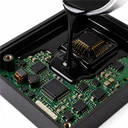
Figure 1. Flame-retardant epoxy potting is used in transformer assemblies where insulation reliability, structural stabilization, and fire-safety performance must be considered together.
A transformer does not operate under a single stress condition. During service, heat is continuously generated in the windings and core, electrical insulation must remain stable over time, and the internal structure may also experience vibration or repeated thermal expansion.
When these conditions are combined inside a compact or enclosed assembly, potting is often used to support the insulation system and stabilize internal components. Flame-retardant formulations are then considered in designs where fire behavior is also part of the engineering requirement.
Key Design Considerations for Transformer Potting
Thermal Exposure
In transformer potting, temperature is not only about the rated operating condition. Engineers also need to consider how heat moves through the potted structure and whether local heat buildup may accelerate aging over time.
For heavily filled or enclosed designs, heat dissipation may become less efficient. Under these conditions, the material should be evaluated together with transformer geometry, winding arrangement, and expected thermal load.
Electrical Insulation Reliability
Potting is often used to support insulation reliability between windings, cores, pins, and surrounding conductive parts. In practical designs, the question is not only dielectric strength on paper, but whether insulation margins remain stable after curing, heating, and long-term service exposure.
Fire-Safety Requirements
Some transformer applications require flame-retardant behavior as part of product safety design. In these cases, epoxy systems with flame-retardant classification may be considered, but final compliance still depends on the finished assembly and applicable standards.
Mechanical Stabilization
Potting may help reduce internal movement of windings or components during transport, vibration, or thermal cycling. This can be relevant in designs where long-term positional stability matters, especially when the transformer is used in compact or mechanically demanding equipment.
Typical Transformer Situations Where Potting Is Considered
Potting requirements can vary significantly depending on the transformer design.
Small transformers used in control boards or enclosed modules may place more emphasis on compact insulation and stable production processing. Larger units or higher-load designs may place more attention on heat accumulation, internal stress, and long-term structural reliability.
For this reason, application context is often more important than application label alone. Two transformers may both use epoxy potting, but the actual material requirements can still differ depending on winding geometry, service temperature, enclosure condition, and expected operating life.
Material Selection Notes
Typical Transformer Situations Where Potting Is Considered
Transformer potting is not always defined by industry category. In many cases, the deciding factors are whether the unit is enclosed, how much heat is retained during operation, and how stable the internal structure must remain over time.
A compact control transformer, for example, may be evaluated mainly for insulation retention in limited space. A larger power unit may be reviewed more for thermal load, internal fixing, and long-term service stability.
This is why transformer potting requirements are usually discussed in relation to operating condition and assembly structure, not by application name alone.
Related Product Information
For product specifications, UL 94 V-0 classification details, processing conditions, and supply information, please refer to the dedicated product page:
👉UL94 V-0 Flame Retardant Epoxy Potting Compound
(Main product page – specifications & supply information)
Hot Tags: Flame-Retardant Epoxy Potting for Transformers|Application Overview, suppliers, manufacturers, factory, customized, wholesale, bulk, cheap, quotation, low price, free sample, Electrical Casting Potting Epoxy Resin, 2 Part Epoxy Potting Compound, Fire Rated Transformer Epoxy Potting Compound, Epoxy Potting Compound, Single Part Thermally Conductive Epoxy Encapsulant, Flexible Electronic Potting Epoxy Resin
You Might Also Like