


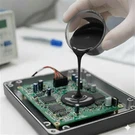


One component silicone is a versatile and widely used material in various industries, known for its excellent sealing, bonding, and insulation properties.
1. Polydimethylsiloxane (PDMS)
The primary component of one component silicone is polydimethylsiloxane (PDMS), a type of silicone polymer. PDMS is a synthetic polymer composed of repeating units of dimethylsiloxane, which consists of a silicon atom bonded to two methyl groups and two oxygen atoms. This structure gives PDMS its unique properties, such as low surface tension, high flexibility, and excellent thermal stability.
PDMS is the backbone of one component silicone, providing the material with its elastic and rubbery nature. It allows the silicone to stretch and deform without losing its shape, making it ideal for applications where flexibility is required, such as sealing joints and gaskets. Additionally, PDMS has a low glass transition temperature, which means it remains flexible even at low temperatures, making it suitable for use in cold environments.


2. Cross - Linking Agents
To transform the liquid PDMS into a solid, elastic material, cross - linking agents are added to the one component silicone formulation. These agents react with the PDMS chains, forming chemical bonds between them and creating a three - dimensional network structure.
There are different types of cross - linking agents used in one component silicone, depending on the curing mechanism. For example, in moisture - curing one component silicones, the cross - linking agent reacts with moisture in the air to form a solid. Common cross - linking agents in moisture - curing silicones include alkoxysilanes. When exposed to moisture, the alkoxysilanes hydrolyze and then react with the PDMS chains to form cross - links.
In addition to moisture - curing cross - linking agents, there are also heat - curing and UV - curing cross - linking agents. Heat - curing cross - linking agents require the application of heat to initiate the cross - linking reaction, while UV - curing cross - linking agents are activated by ultraviolet light.
3. Fillers
Fillers are another important component of one component silicone. They are added to improve the mechanical properties, such as strength, hardness, and abrasion resistance, of the silicone. Common fillers used in one component silicone include silica, calcium carbonate, and talc.
Silica is one of the most widely used fillers in silicone formulations. It can enhance the tear strength and tensile strength of the silicone. Silica particles act as reinforcement, preventing the growth of cracks and improving the overall durability of the material. Calcium carbonate is also a popular filler, which can increase the hardness and stiffness of the silicone. Talc is often used to improve the flow properties of the silicone during processing.
4. Plasticizers
Plasticizers are added to one component silicone to increase its flexibility and reduce its hardness. They work by reducing the intermolecular forces between the PDMS chains, allowing them to move more freely. This results in a softer and more pliable material.
Common plasticizers used in one component silicone include phthalates and non - phthalate plasticizers. Phthalates have been widely used in the past, but due to concerns about their potential health effects, non - phthalate plasticizers are becoming more popular. Non - phthalate plasticizers offer similar performance to phthalates while being more environmentally friendly.
5. Additives
Additives are used in one component silicone to impart specific properties to the material. For example, antioxidants are added to prevent the silicone from oxidizing and degrading over time. UV stabilizers are used to protect the silicone from the damaging effects of ultraviolet light, which can cause discoloration and embrittlement.
Flame retardants are another important type of additive. They are added to make the silicone fire - resistant. Flame retardants work by releasing gases that dilute the oxygen in the air or by forming a char layer on the surface of the silicone, which acts as a barrier to heat and oxygen.
Applications of One Component Silicone
One component silicone's unique chemical composition gives it a wide range of applications. In the electronics industry, it is used for White Fire Rated Silicone for Fixing Pcb Component. The silicone's excellent insulation properties and ability to withstand high temperatures make it ideal for protecting and securing PCB components.
In the construction industry, One Part Silicone Sealant is used for sealing joints and gaps in buildings. The silicone's flexibility and weather resistance ensure a long - lasting and watertight seal.
In the automotive industry, Electrical Silicone Rubber Sealant is used for sealing electrical connections and protecting them from moisture and corrosion. In the automotive industry, Electrical Silicone Rubber Sealant is used for sealing electrical connections and protecting them from moisture and corrosion. These materials help provide reliable insulation and environmental protection for sensitive electronic assemblies. For example, RTV1 electrical insulating silicone is commonly used where stable electrical insulation and moisture resistance are required.
References
- Mark, J. E., & Erman, B. (2007). Science and Technology of Rubber. Academic Press.
- Dow Corning. (2019). Silicone Technology Handbook.
- Wacker Chemie AG. (2020). Silicones: Properties, Applications, Technology.