


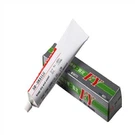


Is 2 Component Potting Silicone Glue Flammable?
This is a crucial concern, especially in industries where safety and fire resistance are of utmost importance. In this blog post, I will delve into the topic of whether 2 Component Potting Silicone Glue is flammable, exploring its properties, testing standards, and real - world applications.
Understanding 2 Component Potting Silicone Glue
2 Component Potting Silicone Glue, also known as 2 Part Silicone Potting Compound, is a type of adhesive and potting material that consists of two components: a base and a curing agent. When these two components are mixed in the correct ratio, a chemical reaction occurs, resulting in the formation of a solid, flexible, and durable material. This material is widely used in various industries, including electronics, automotive, and aerospace, for encapsulation, bonding, and sealing applications.
One of the key advantages of 2 Component Potting Silicone Glue is its excellent thermal stability. Silicone materials can withstand a wide range of temperatures without significant degradation, making them suitable for applications where high temperatures are involved. Additionally, silicone glues offer good electrical insulation properties, moisture resistance, and chemical resistance, which are essential for protecting sensitive electronic components.
Flammability of 2 Component Potting Silicone Glue
The flammability of 2 Component Potting Silicone Glue depends on several factors, including the formulation of the product, the presence of flame - retardant additives, and the testing conditions. In general, pure silicone materials have a relatively high ignition temperature and are considered to be self - extinguishing. This means that once the source of ignition is removed, the silicone material will stop burning on its own.
However, to meet the strict safety requirements of many industries, manufacturers often add flame - retardant additives to the 2 Component Potting Silicone Glue. In electrical encapsulation applications, RTV2 fire-resistant electrical potting resin is commonly used where flame retardancy and electrical insulation are both required for safety-critical electronic assemblies.These additives work by interfering with the combustion process, either by releasing gases that dilute the oxygen in the air or by forming a protective char layer on the surface of the material.
Our company offers UL 94V - 0 Flame Retardant Silicone Potting Compound, which has been tested and certified to meet the UL 94V - 0 standard. The UL 94V - 0 standard is one of the most widely recognized flammability standards for plastics and other materials. A material that meets the UL 94V - 0 standard must stop burning within 10 seconds after the ignition source is removed, and there should be no dripping of flaming particles that could ignite cotton wool placed below the test specimen.


Testing and Certification
To ensure the safety and reliability of our 2 Component Potting Silicone Glue, we conduct rigorous testing in accordance with international standards. In addition to the UL 94V - 0 test, we also perform other flammability tests, such as the oxygen index test and the cone calorimeter test.
The oxygen index test measures the minimum concentration of oxygen in a mixture of oxygen and nitrogen that is required to support combustion of a material. A higher oxygen index indicates better flame resistance. Our 2 Component Potting Silicone Glue typically has a high oxygen index, which means it requires a relatively high concentration of oxygen to burn.
The cone calorimeter test is a more comprehensive test that measures various parameters related to the fire behavior of a material, including the heat release rate, mass loss rate, and smoke production. By analyzing these parameters, we can gain a better understanding of how our product will perform in a real - fire situation.
Real - World Applications
The non - flammable or flame - retardant properties of 2 Component Potting Silicone Glue make it an ideal choice for many critical applications. In the electronics industry, for example, it is used to encapsulate printed circuit boards (PCBs) and other electronic components to protect them from moisture, dust, and mechanical damage. In case of a fire, the flame - retardant properties of the silicone glue can help prevent the spread of fire and reduce the risk of electrical short - circuits, which could lead to more serious damage.
In the automotive industry, 2 Component Potting Silicone Glue is used for bonding and sealing various components, such as sensors, connectors, and control units. The high - temperature resistance and flame - retardant properties of the silicone glue ensure the safety and reliability of these components in the harsh environment of an automobile engine compartment.
Conclusion
In conclusion, 2 Component Potting Silicone Glue can be formulated to be non - flammable or flame - retardant, depending on the specific requirements of the application.
References
- ASTM International. Standards related to flammability testing of materials.
- Underwriters Laboratories. UL 94 Standard for Tests for Flammability of Plastic Materials for Parts in Devices and Appliances.
- Various industry research reports on the properties and applications of silicone potting compounds.