

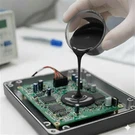



The oxygen index (LOI) of epoxy potting compounds is an important parameter used to evaluate flame-retardant performance and fire safety in electronic applications. Engineers often use LOI values to understand how easily a material can sustain combustion and whether it meets safety requirements for electrical equipment.
Understanding the Oxygen Index
The oxygen index is defined as the minimum concentration of oxygen, expressed as a percentage by volume, in a mixture of oxygen and nitrogen that will support flaming combustion of a material in a steady - state. It is measured under specific laboratory conditions according to standards such as ASTM D2863. A higher oxygen index indicates that the material is more difficult to burn, as it requires a higher concentration of oxygen to sustain combustion.
For 2 Part Epoxy Potting Compounds, the oxygen index can vary widely depending on factors such as the type of epoxy resin used, the curing agents, and any additives incorporated into the formulation. Generally, epoxy potting compounds can have oxygen indices ranging from around 20% to over 40%.
Factors Influencing the Oxygen Index of 2 Part Epoxy Potting Compound
Resin Chemistry
The base epoxy resin used in the potting compound has a fundamental impact on its oxygen index. Epoxy resins with certain chemical structures may be inherently more flame - resistant. For example, epoxy resins containing aromatic rings tend to have better flame - retardant properties compared to those with aliphatic chains. Aromatic structures can form a more stable char layer during combustion, which acts as a physical barrier, reducing the rate of heat transfer and the release of flammable gases.
Curing Agents
The curing agent used to harden the epoxy resin also affects the oxygen index. Some curing agents can contribute to the formation of a more cross - linked and thermally stable network structure. This type of structure is more resistant to degradation during combustion and can enhance the flame - retardant performance of the potting compound.
Additives
Flame - retardant additives are commonly incorporated into 2 Part Epoxy Potting Compounds to increase their oxygen index. These additives can be classified into two main types: reactive and non - reactive. Reactive additives are chemically incorporated into the epoxy resin matrix during the curing process. They can act by releasing non - flammable gases during combustion or by promoting the formation of a char layer. Non - reactive additives, on the other hand, are physically mixed into the compound. They usually work by diluting the flammable components or by absorbing heat.
Importance of Oxygen Index in Different Applications
Electrical and Electronic Applications
In electrical and electronic devices, the oxygen index of the potting compound is of great importance. Electronic components generate heat during operation, and in the event of a fault, there is a risk of overheating and ignition. A potting compound with a high oxygen index can prevent the spread of fire, protecting the surrounding components and reducing the risk of damage to the entire system. For example, our Electrically Insulative Potting Epoxy Resin is designed to have a high oxygen index, providing excellent electrical insulation as well as flame - retardant properties.
Automotive Applications
In the automotive industry, potting compounds are used for various applications such as encapsulating sensors and electronic control units. These components are often exposed to high temperatures and harsh environments. A potting compound with a suitable oxygen index can help ensure the safety and reliability of the vehicle's electrical and electronic systems. Our Flexible Epoxy Resin Potting Compound offers both flexibility and good flame - retardant characteristics, making it a suitable choice for automotive applications.


Aerospace Applications
Aerospace applications demand materials with the highest level of safety and performance. The oxygen index of potting compounds is a critical factor in aerospace electronics and other systems. In an environment where fire safety is non - negotiable, a high oxygen index potting compound can prevent the propagation of fire and protect vital equipment. Our Thermal Transfer Electronic Potting Epoxy Adhesive not only provides efficient thermal transfer but also has excellent flame - retardant properties, meeting the strict requirements of the aerospace industry.
Measuring the Oxygen Index of Our 2 Part Epoxy Potting Compounds
At our company, we follow strict quality control procedures when it comes to measuring the oxygen index of our products. We use state - of - the - art testing equipment and follow international standards such as ASTM D2863. Each batch of our 2 Part Epoxy Potting Compound is carefully tested to ensure that it meets or exceeds the specified oxygen index value. Our technical team also conducts continuous research and development to improve the flame - retardant performance of our products.
Selecting the Right 2 Part Epoxy Potting Compound Based on Oxygen Index
When customers are selecting a 2 Part Epoxy Potting Compound, they need to consider the specific requirements of their application. If fire safety is a top priority, a potting compound with a high oxygen index should be chosen. However, other factors such as mechanical properties, electrical conductivity, and thermal performance also need to be taken into account.
We offer a wide range of 2 Part Epoxy Potting Compounds with different oxygen indices to meet the diverse needs of our customers. Our technical support team is always ready to assist customers in making the right choice. We can provide detailed product information, including oxygen index values, and offer advice on how to use our products safely and effectively.
Conclusion
The oxygen index of 2 Part Epoxy Potting Compound is a critical parameter that affects its flammability and suitability for various applications. As a leading supplier of 2 Part Epoxy Potting Compounds, we are committed to providing high - quality products with well - defined oxygen indices. Our continuous research and development efforts ensure that our products meet the evolving requirements of different industries.
If you are in need of a reliable 2 Part Epoxy Potting Compound for your project, we encourage you to contact us for a detailed discussion. Our team of experts is eager to understand your specific needs and recommend the most suitable product for you. We look forward to the opportunity to work with you and contribute to the success of your project.
References
- "Standard Test Method for Measuring the Minimum Oxygen Concentration to Support Candle - like Combustion of Plastics (Oxygen Index)", ASTM D2863.
- "Fire Retardancy of Polymers: New Strategies and Mechanisms", edited by A. R. Horrocks and D. Price.
- "Epoxy Resins: Chemistry and Technology", edited by Clayton A. May.