




Epoxy resin is a versatile and widely used material in various industries, known for its strong adhesive properties, durability, and chemical resistance. One of the common questions that arise when considering epoxy resin for different applications is whether it is waterproof. In this blog post, I'll delve into the waterproofing capabilities of epoxy resin and explore how it can be used in water - related applications. As a supplier of epoxy resin, I have in - depth knowledge of its characteristics and applications, which I'll share to help you make informed decisions.
Understanding Epoxy Resin
Epoxy resin is a type of synthetic polymer that is formed through a chemical reaction between an epoxide resin and a hardener. This reaction, known as curing, results in a rigid and durable material. The cured epoxy resin has excellent mechanical properties, including high strength and good resistance to abrasion, chemicals, and heat.
The structure of epoxy resin plays a key role in its waterproofing ability. The cross - linked polymer network formed during curing is relatively dense, which can prevent the penetration of water molecules. However, the degree of waterproofing depends on several factors, such as the formulation of the epoxy resin, the curing process, and the application method.
Factors Affecting the Waterproofing Ability of Epoxy Resin
Formulation
Different formulations of epoxy resin have different levels of waterproofness. Some epoxy resins are specifically designed for high - moisture or underwater applications. For example, High Temp Encapsulation Epoxy Resin is formulated to withstand high temperatures and also has good waterproofing properties. These specialized formulations often contain additives or polymers that enhance their resistance to water.
On the other hand, general - purpose epoxy resins may not provide the same level of waterproof protection. They are suitable for indoor applications or areas with low moisture levels. If you need a waterproof epoxy resin for a specific project, it's important to choose the right formulation based on the environmental conditions and requirements.
Curing Process
The curing process is crucial for achieving the best waterproofing performance of epoxy resin. If the epoxy resin does not cure properly, it may have voids or unevenness in its structure, which can allow water to penetrate. Factors such as temperature, humidity, and the ratio of resin to hardener can affect the curing process.
For a proper cure, the recommended temperature and humidity ranges should be followed during application. Most epoxy resins cure best at moderate temperatures between 65°F - 80°F (18°C - 27°C) and relative humidity levels of around 40% - 50%. Additionally, using the correct ratio of resin to hardener as specified by the manufacturer is essential. Incorrect ratios can lead to incomplete curing and reduced waterproofing capabilities.
Application Method
The way the epoxy resin is applied also impacts its waterproofing effect. A smooth and even application is necessary to create a continuous barrier against water. If the epoxy resin is applied too thickly or unevenly, it may form bubbles or runs, which can compromise its waterproof integrity.
Surface preparation is another important aspect of the application process. The surface where the epoxy resin is to be applied should be clean, dry, and free of dust, oil, and other contaminants. If the surface is not properly prepared, the epoxy resin may not adhere well, and water can seep under the coating.
Applications Where Waterproof Epoxy Resin is Ideal
Marine Applications
In the marine industry, epoxy resin is widely used due to its excellent waterproofing properties. It can be used to coat the hulls of boats to prevent water from seeping into the wood or fiberglass. Epoxy coatings on boat hulls also protect against corrosion and marine organisms. Additionally, epoxy resin can be used for bonding and repairing various parts of a boat, such as decks and bulkheads.
Bathroom and Kitchen Applications
In bathrooms and kitchens, where there is a lot of moisture, waterproof epoxy resin can be used for countertops, floors, and backsplashes. 5 Minutes Epoxy Bonding Adhesive can be used for quick repairs and bonding in these areas. Epoxy coatings provide a smooth and easy - to - clean surface that is resistant to water, stains, and chemicals.
Electrical Encapsulation
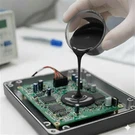
For electrical components, Electrically Insulative Potting Epoxy Resin is used to protect them from moisture and other environmental factors. The waterproof nature of epoxy resin ensures that the electrical components are not damaged by water ingress, which could lead to short circuits or other malfunctions. Similar waterproof protection is also important in surface coating applications such as labels and badges, where clear flexible sticker doming epoxy resin is commonly used to form a protective, moisture-resistant surface layer.

Testing the Waterproofing of Epoxy Resin
There are several ways to test the waterproofing ability of epoxy resin. One simple method is the water immersion test. A sample of the cured epoxy resin is immersed in water for a certain period, and then inspected for signs of water absorption, such as swelling, discoloration, or loss of adhesion.
Another test is the water vapor transmission rate (WVTR) test. This test measures the amount of water vapor that can pass through the epoxy resin over a given area and time. A lower WVTR indicates better waterproofing performance.
Limitations of Epoxy Resin as a Waterproofing Material
Although epoxy resin is generally considered waterproof, it has some limitations. Over time, exposure to UV light can cause the epoxy resin to degrade, reducing its waterproofing and mechanical properties. In outdoor applications, a UV - resistant topcoat may be required to protect the epoxy resin.


Also, extreme temperature changes and physical stress can cause the epoxy resin to crack or delaminate, allowing water to penetrate. Therefore, in applications where there are significant temperature fluctuations or high mechanical stress, additional reinforcement or flexible epoxy formulations may be needed.
Conclusion
In conclusion, epoxy resin can be highly waterproof when the right formulation is chosen, the curing process is carried out correctly, and the application method is proper. It has a wide range of applications in water - related environments, from marine to household and electrical applications. However, it's important to be aware of its limitations and take appropriate measures to ensure its long - term performance.
If you are considering using epoxy resin for a project that requires waterproofing, I'm here to help. As a professional epoxy resin supplier, I can provide you with the right product recommendations based on your specific requirements. Whether you need a high - performance High Temp Encapsulation Epoxy Resin for industrial applications or a 5 Minutes Epoxy Bonding Adhesive for quick repairs, I can offer you quality products and technical support. Contact me for more information and to start a procurement discussion.
References
- "The Handbook of Epoxy Resins" by Lee and Neville
- "Epoxy Resin Chemistry and Applications" by May and Tanaka
- Industry studies on the performance of epoxy resin in different environments.