


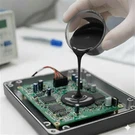


As a supplier of 2 Part Silicone Potting Compound, I've had my fair share of customers asking about how to improve the adhesion of this stuff to a substrate. It's a crucial question, especially when you're relying on the potting compound to protect and insulate your electronic components. So, let's dive right in and explore some practical ways to boost that adhesion.
Understanding the Basics
First things first, it's important to know what 2 Part Silicone Potting Compound is all about. This type of compound consists of two components - a base and a curing agent. When you mix them together, a chemical reaction takes place, resulting in a cured silicone rubber that can encapsulate and protect your components.
But for it to do its job effectively, it needs to stick well to the substrate. The substrate could be anything from a printed circuit board (PCB) to a metal housing. If the adhesion is poor, the potting compound might not provide the necessary protection, and you could end up with issues like moisture ingress or mechanical failure.
Surface Preparation
One of the most important steps in improving adhesion is proper surface preparation. You wouldn't expect paint to stick well to a dirty wall, right? The same goes for 2 Part Silicone Potting Compound.
- Cleaning: Start by cleaning the substrate thoroughly. Remove any dirt, dust, grease, or oxidation. You can use a suitable solvent like isopropyl alcohol or acetone for this purpose. Just make sure to let the substrate dry completely before applying the potting compound.
- Abrasion: In some cases, lightly abrading the surface can help improve adhesion. This creates a rough surface for the potting compound to grip onto. You can use sandpaper or a wire brush for this, but be careful not to damage the substrate.
Choosing the Right Potting Compound
Not all 2 Part Silicone Potting Compounds are created equal. Different formulations have different adhesion properties, so it's important to choose the right one for your application.
- Compatibility: Make sure the potting compound is compatible with the substrate material. For example, some potting compounds are specifically designed for use with PCBs, while others are better suited for metal or plastic substrates.
- Adhesion Promoters: Some potting compounds come with built-in adhesion promoters, which can help improve adhesion to a variety of substrates. If your application requires strong adhesion, look for a potting compound with this feature.
Mixing and Application
Proper mixing and application of the 2 Part Silicone Potting Compound are also crucial for good adhesion.
- Mixing: Follow the manufacturer's instructions carefully when mixing the two components. Make sure to mix them thoroughly to ensure a uniform reaction. Incomplete mixing can result in poor adhesion and other issues.
- Application: Apply the potting compound evenly to the substrate. Avoid introducing air bubbles, as these can weaken the adhesion. You can use a syringe or a dispensing gun for precise application.
Curing Conditions
The curing conditions can also have a significant impact on adhesion.
- Temperature and Humidity: Most 2 Part Silicone Potting Compounds have specific temperature and humidity requirements for curing. Make sure to cure the compound under the recommended conditions. Higher temperatures can generally speed up the curing process, but they can also affect the adhesion if they're too high.
- Curing Time: Allow the potting compound to cure for the full recommended time. Rushing the curing process can result in poor adhesion and other issues.
Additional Tips
Here are some additional tips to improve adhesion:
- Primers: In some cases, using a primer can help improve adhesion. Primers are thin coatings that are applied to the substrate before the potting compound. They can help create a better bond between the substrate and the potting compound.
- Post-Curing: After the initial curing, you can sometimes improve adhesion by post-curing the potting compound at a higher temperature for a short period of time. This can help to further strengthen the bond between the potting compound and the substrate.
Optimize Performance With Heat Resistant Silicone Potting Compound
If you're looking for a high-performance 2 Part Silicone Potting Compound, check out our Optimize Performance with a heat resistant silicone potting compound. This compound is designed to provide excellent adhesion and heat resistance, making it ideal for a variety of applications.
2 Component Potting Silicone Glue
Our 2 Component Potting Silicone Glue is another great option for improving adhesion. It offers strong bonding to a wide range of substrates and is easy to use.
Rtv2 Fire Resistant Electrical Potting Resin
For applications that require fire resistance, our Rtv2 Fire Resistant Electrical Potting Resin is a top choice. It provides excellent adhesion and fire protection, ensuring the safety of your electronic components.


Conclusion
Improving the adhesion of 2 Part Silicone Potting Compound to a substrate is a multi-step process that involves proper surface preparation, choosing the right potting compound, and following the correct mixing, application, and curing procedures. By following these tips, you can ensure that your potting compound provides the best possible protection and performance.
If you have any questions or need further advice on improving adhesion or choosing the right 2 Part Silicone Potting Compound for your application, don't hesitate to get in touch. We're here to help you find the best solution for your needs. Contact us today to start a discussion about your procurement requirements and let's work together to optimize your projects with our high-quality potting compounds.
References
- Manufacturer's instructions for 2 Part Silicone Potting Compounds
- Technical literature on surface preparation and adhesion in potting applications