




Hey there! As a supplier of Polyurethane Resin Adhesive Glue, I often get asked about its chemical resistance. It's a crucial question, especially for industries where the glue will be exposed to various chemicals. So, let's dive right in and explore whether Polyurethane Resin Adhesive Glue is resistant to chemicals.
Understanding Polyurethane Resin Adhesive Glue
First off, what exactly is Polyurethane Resin Adhesive Glue? Well, it's a type of adhesive that's made from polyurethane polymers. These polymers are known for their versatility and can be formulated to have different properties depending on the application. Polyurethane glues are used in a wide range of industries, from construction and automotive to electronics and furniture manufacturing.
Chemical Resistance of Polyurethane Resin Adhesive Glue
The chemical resistance of Polyurethane Resin Adhesive Glue can vary depending on several factors, including the formulation of the glue, the type of chemicals it's exposed to, and the duration of exposure. In general, polyurethane glues have good resistance to many common chemicals, but they may not be suitable for all chemical environments.
-
Resistance to Organic Solvents
Polyurethane Resin Adhesive Glue typically has good resistance to many organic solvents, such as alcohols, ketones, and esters. However, the resistance can vary depending on the specific solvent and the formulation of the glue. For example, some polyurethane glues may be more resistant to polar solvents like ethanol, while others may be more resistant to non - polar solvents like toluene.
-
Resistance to Acids and Bases
The resistance of polyurethane glues to acids and bases also depends on the formulation. Some polyurethane glues can withstand mild acids and bases, but they may degrade when exposed to strong acids or bases for an extended period. For instance, a polyurethane glue may be able to resist a weak acetic acid solution for a short time, but it may break down when in contact with concentrated sulfuric acid.
-
Resistance to Water and Moisture
One of the great things about polyurethane glues is their relatively good resistance to water and moisture. They can form a strong bond even in damp conditions, and some formulations are specifically designed for underwater or high - humidity applications. However, prolonged exposure to water can still cause some degradation over time, especially if the glue is not properly formulated.
Factors Affecting Chemical Resistance
There are several factors that can affect the chemical resistance of Polyurethane Resin Adhesive Glue:
-
Formulation
The formulation of the glue plays a significant role in its chemical resistance. Different additives and modifiers can be used to enhance the glue's resistance to specific chemicals. For example, adding certain stabilizers can improve the glue's resistance to UV light and some chemicals.
-
Cross - linking
The degree of cross - linking in the polyurethane polymer affects its chemical resistance. A higher degree of cross - linking generally results in better chemical resistance, as the polymer network is more stable and less likely to be attacked by chemicals.
-
Temperature
Temperature can also have an impact on the chemical resistance of the glue. Higher temperatures can accelerate the chemical reactions between the glue and the chemicals it's exposed to, reducing its resistance. On the other hand, lower temperatures may slow down these reactions, but they can also make the glue more brittle.
Applications and Chemical Resistance
In different applications, the chemical resistance requirements of Polyurethane Resin Adhesive Glue vary.
-
Construction Industry
In the construction industry, polyurethane glues are used for bonding various materials, such as wood, metal, and concrete. They may be exposed to chemicals like cleaning agents, solvents, and even some environmental pollutants. A good construction - grade polyurethane glue should have sufficient resistance to these common chemicals to ensure a long - lasting bond.

-
Doming Applications
In surface protection applications such as labels, nameplates, and decorative badges, clear polyurethane urethane resin for doming is commonly used to provide chemical resistance, moisture protection, and long-term optical clarity.

-
Automotive Industry
In the automotive industry, polyurethane glues are used for assembling parts, such as windshields, body panels, and interior components. These glues need to resist automotive fluids like gasoline, oil, and coolant. The chemical resistance of the glue is crucial to maintain the integrity of the vehicle's structure and components.
-
Electronics Industry
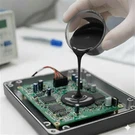
In the electronics industry, polyurethane glues are used for potting and encapsulating electronic components. They need to resist chemicals like fluxes, cleaning solvents, and moisture. For example, Pu Insulation Potting Compound is designed to provide insulation and protection for electronic components while being resistant to relevant chemicals.
Conclusion
So, is Polyurethane Resin Adhesive Glue resistant to chemicals? The answer is that it depends. While polyurethane glues generally have good resistance to many common chemicals, their performance can vary depending on the formulation, the type of chemicals, and the exposure conditions.
References
- "Handbook of Adhesives and Sealants" by Andrew T. DiBenedetto
- "Polyurethane Handbook" by G. Oertel