




One - part silicone sealants are widely used in various industries due to their excellent properties such as good adhesion, weather resistance, and flexibility. As a one - part silicone sealant supplier, I often receive questions from customers about whether these sealants shrink during the curing process. In this blog, I will delve into this topic and provide a comprehensive answer based on scientific knowledge and practical experience.
Understanding One - Part Silicone Sealants
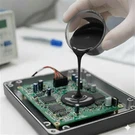
One - part silicone sealants are formulated to cure at room temperature when exposed to atmospheric moisture. They are convenient to use as they do not require any mixing before application. These sealants are commonly used in construction, automotive, electronics, and many other fields for sealing joints, gaps, and bonding different materials.
There are different types of one - part silicone sealants available in the market. For example, Rtv - 1 Alkoxy Electronic Silicone Sealant is specifically designed for electronic applications. It offers good electrical insulation properties and is suitable for sealing electronic components. Moisture Cure Electric Silicone Adhesive is another type that cures upon exposure to moisture and is used for bonding electrical parts. Water Resistant Silicone Adhesive is ideal for applications where water resistance is crucial, such as in bathrooms and kitchens.
The Curing Process of One - Part Silicone Sealants
The curing of one - part silicone sealants is a chemical reaction that occurs when the sealant comes into contact with moisture in the air. During this process, the silicone polymer chains cross - link, transforming the sealant from a liquid or paste - like state to a solid elastomer.
The general reaction mechanism involves the hydrolysis of reactive groups on the silicone polymer molecules by water molecules from the air. This is followed by a condensation reaction, where the hydrolyzed groups react with each other to form cross - links. The rate of curing depends on several factors, including temperature, humidity, and the thickness of the sealant layer.
Shrinkage During Curing
Shrinkage is a common concern when using one - part silicone sealants. In general, one - part silicone sealants do experience some degree of shrinkage during curing, but the amount of shrinkage can vary significantly depending on several factors.
Chemical Composition
The chemical formulation of the sealant plays a crucial role in determining the shrinkage rate. Sealants with a higher proportion of reactive groups may have a higher shrinkage rate because more chemical reactions are occurring during curing, which can cause a reduction in volume. For example, some sealants that use certain types of cross - linking agents may shrink more than others.
Moisture Availability
The amount of moisture present during curing affects shrinkage. If the humidity is low, the curing process may be slower, and the sealant may not fully cure, leading to higher shrinkage as the reaction continues over a longer period. On the other hand, in high - humidity environments, the curing may be faster, but there can still be some shrinkage due to the release of by - products from the chemical reactions.
Thickness of the Sealant Layer
Thicker layers of sealant tend to shrink more than thinner layers. This is because the inner part of a thick layer may take longer to cure, and the chemical reactions occurring over a larger volume can result in more significant volume reduction. Additionally, the outer part of the thick layer may cure and form a skin, which can restrict the movement of the uncured material inside, leading to internal stresses and increased shrinkage.
Measuring Shrinkage
Measuring the shrinkage of one - part silicone sealants can be done using various techniques. One common method is to measure the dimensions of the sealant before and after curing. For example, a rectangular sample of the sealant can be applied to a flat surface, and its length, width, and height can be measured using a caliper or a similar measuring tool. After the sealant has fully cured, the dimensions are measured again, and the percentage of shrinkage can be calculated using the following formula:
[Shrinkage(%)=\frac{V_{initial}-V_{final}}{V_{initial}}\times100%]
where (V_{initial}) is the initial volume of the sealant and (V_{final}) is the final volume after curing.
Minimizing Shrinkage
As a supplier, we are aware of the importance of minimizing shrinkage to ensure the quality of our products. Here are some strategies to reduce shrinkage:
Optimized Formulation
We continuously research and develop our sealant formulations to minimize shrinkage. By carefully selecting the raw materials and the proportions of each component, we can create sealants with lower shrinkage rates. For example, using high - quality silicone polymers and carefully chosen cross - linking agents can help achieve better results.
Controlling Curing Conditions
Controlling the curing environment can also help reduce shrinkage. Maintaining an appropriate range of temperature and humidity during curing can ensure a more uniform and complete curing process. Additionally, avoiding rapid changes in environmental conditions can prevent excessive shrinkage.
Applications and Shrinkage Considerations
In different applications, the acceptable level of shrinkage varies. For example, in precision electronic applications, even a small amount of shrinkage can cause problems such as misalignment of components or disruption of electrical connections. Therefore, for applications like Rtv - 1 Alkoxy Electronic Silicone Sealant, minimizing shrinkage is of utmost importance.


In construction applications, such as sealing joints in buildings, a slightly higher level of shrinkage may be acceptable as long as it does not compromise the overall sealing performance. However, excessive shrinkage can lead to gaps in the seal, which can allow water and air infiltration, reducing the energy efficiency and durability of the building.
Conclusion
In conclusion, one - part silicone sealants do shrink during curing, but the amount of shrinkage can be controlled through proper formulation and management of curing conditions. As a [One - Part Silicone Sealant Supplier], we are committed to providing high - quality products with minimal shrinkage to meet the diverse needs of our customers.
If you are looking for one - part silicone sealants for your specific application, we would be more than happy to assist you. Our team of experts can help you select the most suitable product based on your requirements and provide technical support throughout the process. Contact us to start a discussion about your procurement needs and find the best solution for your projects.
References
- Wypych, G. (2004). Handbook of Sealants: Technology, Properties, and Applications. Noyes Publications.
- Mittal, K. L. (Ed.). (1991). Adhesion Aspects of Polymeric Coatings. CRC Press.