




The curing time of a 2 Part Silicone Potting Compound is a crucial factor that significantly impacts its application and performance. As a leading supplier of 2 Part Silicone Potting Compounds, we understand the importance of this parameter and are committed to providing our customers with in - depth knowledge about it.
Understanding 2 Part Silicone Potting Compounds
Two - part silicone potting compounds consist of a base component and a curing agent. When these two components are mixed in the correct ratio, a chemical reaction occurs, leading to the formation of a solid silicone rubber. This rubber is used to encapsulate electronic components, providing protection against moisture, dust, vibration, and electrical interference.
Our product range includes various types of 2 Part Silicone Potting Compounds, such as the RTV - 2 Clear Silicone Rubber Liquid, which is known for its excellent clarity and high - performance characteristics. Another popular product is the Flame - Retardant RTV Silicone Potting Compound for Vibration - Prone Electronics | SFY - 161 - Taiwan, designed specifically for electronics that are exposed to flame risks and vibrations. And the Two - component Liquid Silicone Potting Rubber offers great flexibility and potting capabilities.
Factors Affecting Curing Time
Mixing Ratio
The most fundamental factor is the mixing ratio of the two components. Each product has a specified ratio, usually mentioned in the product datasheet. If the ratio is incorrect, the curing process may be affected. For example, if there is too much of the curing agent, the compound may cure too quickly, leading to incomplete mixing and potential voids in the cured rubber. On the other hand, too little curing agent may result in a very long curing time or even prevent the compound from curing properly.
Temperature
Temperature plays a vital role in the curing process. Generally, higher temperatures accelerate the curing reaction, while lower temperatures slow it down. At room temperature (around 25°C), our 2 Part Silicone Potting Compounds typically start to cure within a few hours. However, if the temperature is lowered to 10°C, the curing time can extend significantly, perhaps taking several days to reach full cure. Conversely, at elevated temperatures, say 50°C, the compound may cure within an hour or even less. This allows for faster production cycles in industrial settings, but care must be taken as rapid curing can also cause shrinkage and other quality issues.
Humidity
For some types of 2 Part Silicone Potting Compounds, especially those that are moisture - cured, humidity can have an impact on the curing time. In high - humidity environments, the presence of water molecules in the air can react with the curing agent, speeding up the curing process. In low - humidity conditions, the curing may be slower. However, our products are formulated to be relatively insensitive to normal humidity variations, ensuring consistent performance in a wide range of environmental conditions.
Thickness of the Potting
The thickness of the silicone potting layer also affects the curing time. A thinner layer will cure faster than a thicker one. This is because heat transfer and the diffusion of the curing reaction are more efficient in thinner sections. For example, if you are potting a small electronic component with a thin layer of our compound, it may cure in a matter of hours. But if you are filling a large enclosure with a thick layer, it could take days to fully cure, even at optimal temperature and humidity conditions.
Measuring Curing Time
There are several ways to measure the curing time of 2 Part Silicone Potting Compounds. One common method is the touch - test. Initially, the compound is in a liquid state. As it starts to cure, it becomes tacky and then gradually hardens. When it no longer leaves a mark when gently touched with a finger, it has reached a certain stage of cure. However, this is only a rough estimate and does not indicate full cure.
For a more accurate measurement, hardness testing can be used. Instruments such as durometers are used to measure the hardness of the cured silicone. The hardness increases as the curing progresses, and a specific hardness value is often used to define full cure. Another method is to use differential scanning calorimetry (DSC), which measures the heat flow during the curing reaction. By analyzing the DSC curve, the start, peak, and end of the curing reaction can be determined, providing a precise measurement of the curing time.
Importance of Curing Time in Applications
Electronics Manufacturing
In electronics manufacturing, the curing time of the potting compound affects the production cycle. Faster - curing compounds allow for quicker turnaround times, increasing the overall productivity of the manufacturing line. For example, in the production of printed circuit boards (PCBs), a shorter curing time means that the PCBs can be moved to the next assembly stage more rapidly, reducing the time to market for the final product.
Outdoor Applications
For outdoor applications, the curing time is crucial for ensuring the long - term performance of the encapsulated components. If the curing time is too long, the compound may be exposed to environmental factors such as rain, dust, or extreme temperatures during the curing process, which can affect its final properties. A faster - curing compound can resist these environmental challenges more effectively, providing better protection for the electronics.
Optimizing Curing Time
To optimize the curing time, it is essential to follow the recommended mixing ratio and environmental conditions provided in the product datasheet. If possible, pre - heating the components and the potting compound can help reduce the curing time. In addition, using catalysts or accelerators can speed up the curing process, but these should be used with caution as they may also affect other properties of the cured rubber.
Conclusion
As a supplier of 2 Part Silicone Potting Compounds, we understand that the curing time is a critical factor for our customers. By carefully controlling the factors that affect curing time and using appropriate measurement and optimization techniques, our customers can achieve the best results in their applications.
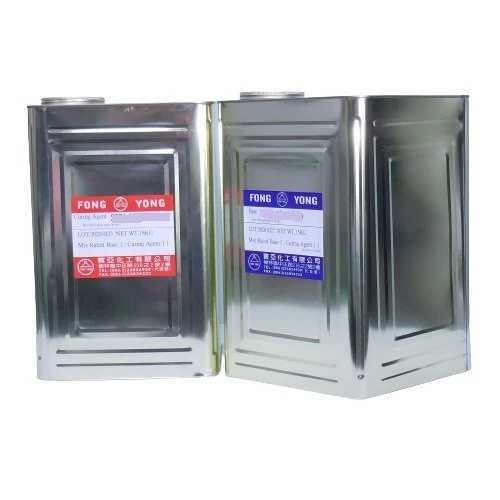

If you are interested in our 2 Part Silicone Potting Compounds or have any questions about their curing time and applications, we welcome you to contact us for a discussion. Our team of experts is ready to provide customized solutions to meet your specific requirements.
References
- Silicone Rubber Handbook: A Guide to Properties, Processing and Applications
- Journal of Elastomers and Plastics: Papers on the chemistry and mechanics of silicone compounds
- Product Datasheets: Our in - house documentation on 2 Part Silicone Potting Compounds