


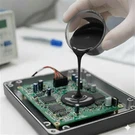


In repair and maintenance applications, cracks are a common-and often frustrating-problem. From hairline cracks in glass to surface damage in plastic housings, many users ask the same practical question:
Can single-part UV cure resin be used to repair cracks?
The short answer is yes-but only in the right situations. Based on real-world usage and material behavior, this article explains where single-part UV cure resin works well for crack repair, and where its limitations become important.
What Is Single-Part UV Cure Resin?
Single-part UV cure resin is an adhesive system that cures when exposed to ultraviolet (UV) light. Engineers selecting suitable single-part UV cure resins for crack repair applications often evaluate curing speed, transparency, and adhesion performance.. Unlike two-part epoxy systems, it does not require mixing. The resin is supplied ready to use, which simplifies handling and reduces application errors.
Curing occurs through a photopolymerization reaction. When UV light reaches the resin, photoinitiators trigger cross-linking, causing the liquid resin to harden-often within seconds or minutes.
This fast, on-demand curing behavior is what makes UV resins attractive for repair work.
Why UV Cure Resin Is Popular for Crack Repair
Fast, Controlled Curing
One of the most practical advantages is speed. The resin remains liquid until UV light is applied, allowing time for precise placement. Once exposed, curing happens quickly, minimizing downtime.
This is especially useful in situations where repaired parts need to return to service without long waiting periods.
Precise Application in Fine Cracks
Because many UV cure resins have low viscosity, they can flow into narrow cracks that are difficult to reach with thicker adhesives. This makes them suitable for repairing fine surface cracks where full penetration is required for a clean finish.
Transparent Repairs for Visual Applications
Many UV cure resins cure to a clear, transparent finish. For glass, acrylic, or decorative plastic parts, this allows cracks to be filled with minimal visual impact, which is often a key requirement in repair work.
Typical Applications Where UV Cure Resin Works Well
Glass and Acrylic Repairs
UV-curable resins are commonly used for small cracks or chips in glass panels, display covers, and acrylic surfaces. When the crack is shallow and accessible to UV light, the resin can stabilize the damaged area and help prevent further spreading.
Plastic Housing and Casing Repairs
Plastic enclosures for electronics or consumer products often develop surface cracks due to impact or stress concentration. UV cure resin can be effective for cosmetic or light-duty repairs, especially when the crack does not carry mechanical load.
Minor Surface Defects in Metal Parts
In some cases, UV cure resin is used to seal or protect small surface cracks in metal components. Here, the resin typically serves as a surface sealant or corrosion barrier rather than a structural repair material.
Important Limitations to Keep in Mind
UV Light Must Reach the Resin
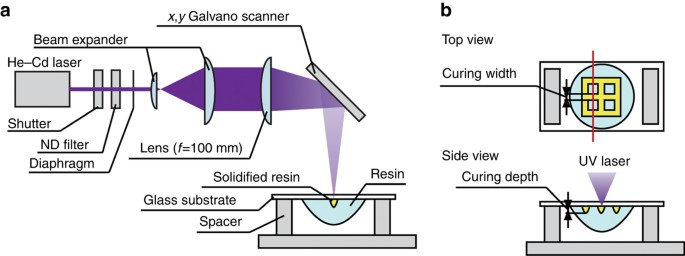
The most important limitation is curing depth. UV light does not penetrate deeply into materials or opaque substrates.
If a crack is deep, enclosed, or shadowed, parts of the resin may remain partially uncured. For this reason, UV cure resin is best suited for shallow, surface-level cracks.

Not a Structural Repair Solution
While UV cure resin can bond strongly, it is not designed to restore structural strength. Cracks in load-bearing components, fatigue-prone areas, or high-stress zones typically require mechanical reinforcement or alternative repair methods.
Using UV resin in these cases may improve appearance but will not address the underlying mechanical issue.
Surface Preparation Still Matters
As with any adhesive repair, surfaces must be clean and free of oil, dust, or loose debris. Poor surface preparation can significantly reduce adhesion quality, even if curing appears complete.
Practical Takeaway
Single-part UV cure resin can be a very effective solution for crack repair when the goal is stabilization, sealing, or cosmetic improvement-and when UV light can fully reach the resin.
However, it should not be viewed as a universal crack repair material. Understanding its curing mechanism and limitations is essential for choosing the right repair approach and avoiding unrealistic expectations.
Final Thought
UV cure resin excels at fast, clean, and precise repairs-but like any material, it performs best when used within its intended scope. Matching the repair method to the crack type is far more important than curing speed alone.